The lights slowly fade into nothingness. The audience’s once-loud voices become whispers; from behind the curtain, you can feel the anticipation building. A pit forms in the bottom of your stomach, and there’s a fleeting rush of panic and anxiety. So you shake out your hands, breathe in, and breathe out. You hear the creaking strings of the violin as its player tunes it for the opening number, and you stop going over every single detail in your head. You let your muscles trust your mind. Breathe in, breathe out. And then all at once you set foot onstage and you are there and you are alive, existing only in that moment.
In the opening paragraph of my Common App essay, I described the last moments behind the curtain before a stage performance quite similar to how I did above. That paragraph was the start of the essay that got me into my dream school. A milestone paragraph for me, and one that I’m still quite proud of.
Only recently when I revisited it did I realize that the paragraph was also a perfect description of my performance anxiety — not just onstage, but in life.
See, I’m a recovering perfectionist, still constantly concerned about somehow messing up in front of the entire world, which now seemingly has access to everything we create through modern technology.
So every time I’m working on a project I’m really passionate about and closing in on finishing it, I worry. And over-worry, and in quarantine with too much time on my hands, over-over-worry to the MAX. It’s not something I’m proud of. But I know that I’m not the only one who experiences this.
As artists, we’re constantly pouring our souls into projects that matter intensely to us. Then, after many deep breaths and detail checks, we press publish or hang up our art piece or put the lights up on our performance for the world to see. In one leap-of-faith moment, we’re saying “Hey there world, here’s my heart, hope you like it!”
It can be nerve-wracking, to say the least. And easy to doubt ourselves, put off publishing it because of a fear of rejection.
But here’s the thing: it’s ok to trust yourself. This is something I’m still learning to do, and it’s not like one day I magically had an epiphany and suddenly I’m just publishing stuff left and right without breaking a sweat. Learning to trust yourself is a process — and a nonlinear one, at that.
But as we’re going through this process of learning to trust ourselves, there are a few things we can do to quell the sometimes-vicious butterflies in our stomachs and alleviate artistic anxiety. Here are a few tips I’ve picked up — translated into some theatre performance analogies, of course.
- Craft an image of the “moment before” and live in it.
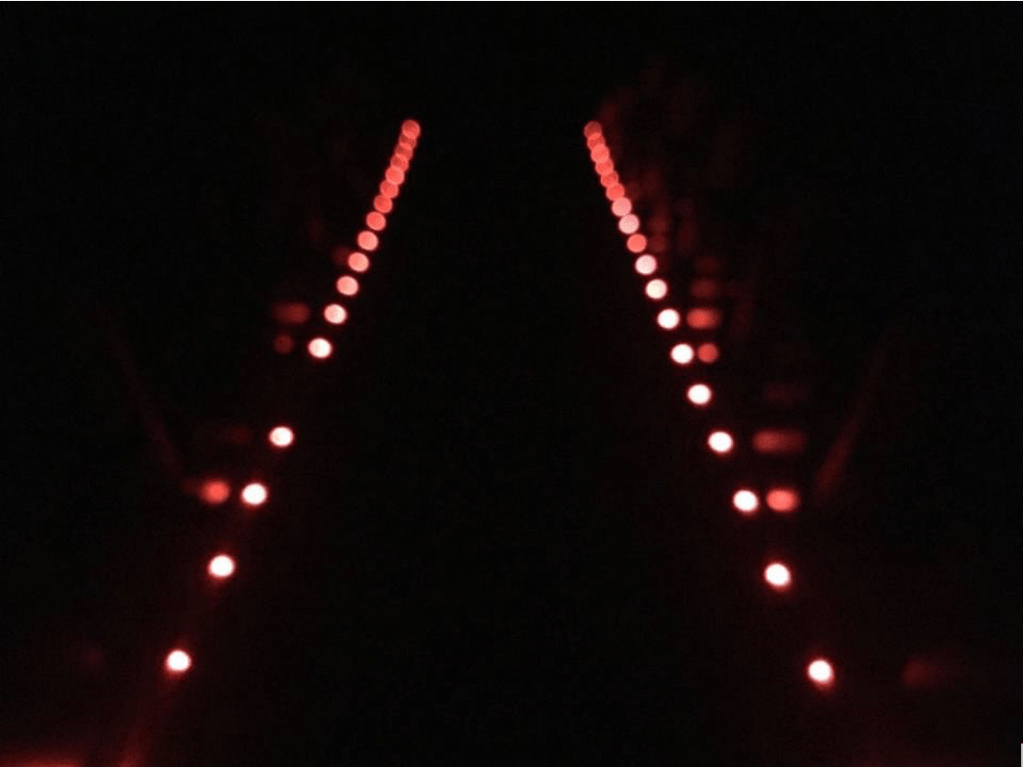
In theatre, we have this thing called the “moment before.” It’s the image you create in your mind of the moment your character is experiencing before you step onstage, the moment before the action that the audience sees. It helps ground you in the story, and takes your mind off of the backstage nerves you’re experiencing.
So when you’re getting ready to publish something big, imagine your “moment before.” Write down all of the things that you’ve accomplished through this project already, think about the small challenges you’ve faced and successes you’ve had along the way and make a list of your favorite things about it. Have it near you when the butterflies are mounting and you’re about to present your project to the world, as a small little confidence boost
2. Find your raindrops on roses and whiskers on kittens (or, alternatively, “Take a Break” like Hamilton should’ve!)
As I mentioned in one of my previous posts, I’m currently in the process of writing a musical. It’s one of the most fun and rewarding projects I’ve worked on in a while, but sometimes, it stresses me out! Similarly, I have this really awesome job right now where I produce podcasts and help with research reports and essay collections for the PR center at my school. We host a lot of big-name people in the industry on our podcast, and it’s my job to edit the episodes and occasionally, to make some promotional materials — the weight of that can also sometimes make me worry.
So when I’m feeling overwhelmed by one (or both!) of these projects, I do something that I enjoy to take my mind off of it for a minute and re-center. It keeps me from spiraling – you know, giving something waaaay too much weight and importance and obsessing over it. To avoid that, I sing. When I had a 120-page report for work coming out one week, I really practiced the heck out of “Liability” by Lorde — a song that never fails to be heartbreakingly beautiful to me.

We often imagine the worst-case scenario in our minds, asking “what if” over and over again. What if this or that goes wrong, what if there’s a typo (a recurring nightmare of mine — yes I’m well aware I’m a nerd) what if no one listens to it or watches it. So imagine it, and then rewrite the script in your head. Prepare for the worst-case scenario, so then when your mind says “what if,” instead of launching into a scene about emotional distress, you can respond with “never fear, I have a plan!”
This is something that I think dance has trained me for: we used to have bag checks at one of my studios to make sure we all had the essentials we needed to re-sew a shoe or fix a rip in our tights during shows if needed. So once you’ve made your mental dance bag toolkit, let your worries go. You’ve prepared as much as you possibly can, now rest (and maybe sing a little!).
4. Know that it doesn’t have to be perfect to be great.
Ok, this one didn’t need a theatre analogy because it’s an anecdotal truth. Now, onto that anecdote I just promised.
Remember my Common App essay, the one that got me into my dream school?
I read over it again today. And if I was writing it right now, I’d rewrite it. I like the concepts, and I’d keep certain sections, but having learned a lot since then, I’d totally restructure it and make it sound loads better.
Here’s the thing though; in the moment when it mattered, that essay was great. In October and November of my senior year when I wrote it, that essay felt like felt like a life-trajectory-defining set of so many words that would determine my future. And I thought it had to be perfect.
And looking back at it now, it wasn’t. But that doesn’t mean it wasn’t great — after all, it got me where I wanted to be. And I’m still proud of it: it represents where I was as a writer so many years ago, and all of the cool ideas that I had, even if they weren’t fully-formed by my standards today.
As works of art ourselves, we are always unfinished. And as we change and grow, so does our art. Trust that everything will have its time and its place, and that it is always a part of your growth. And trust yourself to put it out there in the world, and let the butterflies go when it’s your time to soar.
 Lightbox