
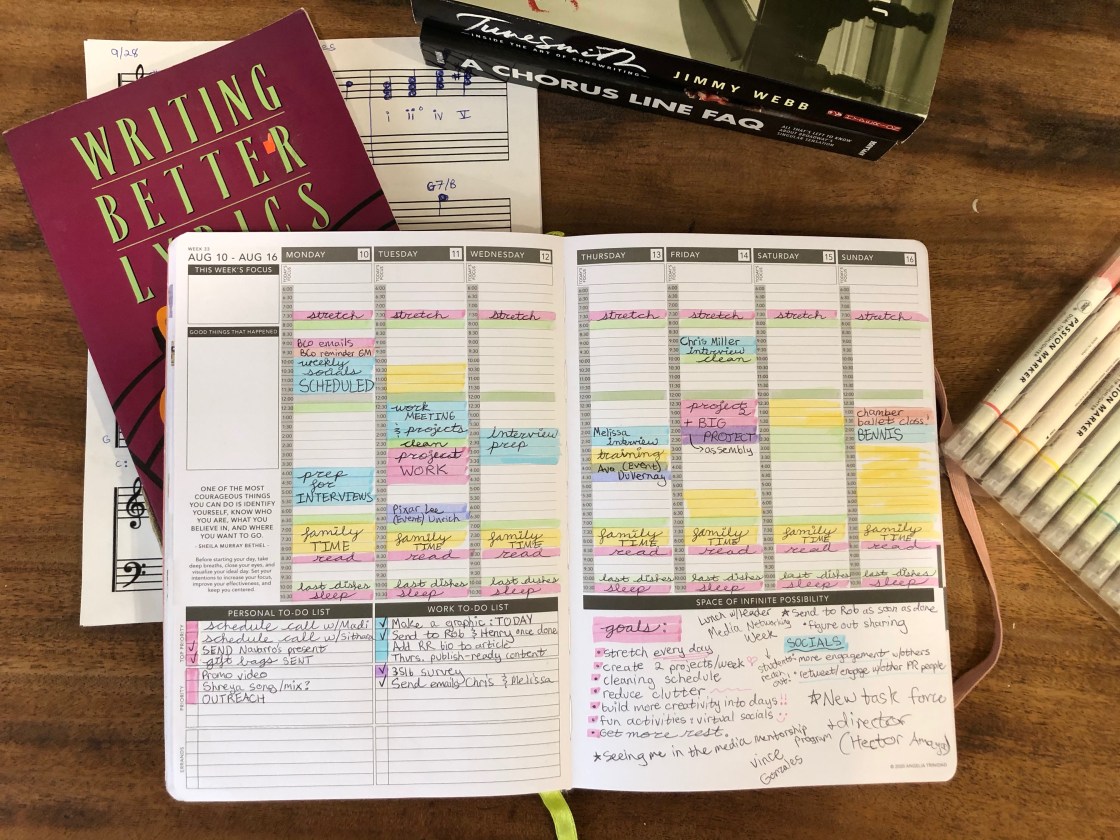
Tackling big creative projects like a pro
After ten years of learning harmonies, practicing choreography, painting set pieces and rushing onstage for mic checks five minutes before the theatre opens, I’m finally embarking on the biggest of all musical theatre endeavors: writing my own musical!
It’s something I’ve wanted to do for a while now, but never had the time or a storyline that I felt was strong enough. Now that I’ve got both, along with the encouragement and mentorship of my songwriting professor, I’m finally getting started.
But where to start? Big creative projects that can take months or years are always daunting, because they require both extensive planning and creative freedom, which seem a little at odds sometimes.
So here’s a little bit about how I’m setting up to embark on this project, in the hopes that maybe it offers a little bit of insight on starting on a long-term idea. Because the first step in any project is always just to begin.
1. Invest in a creative planner
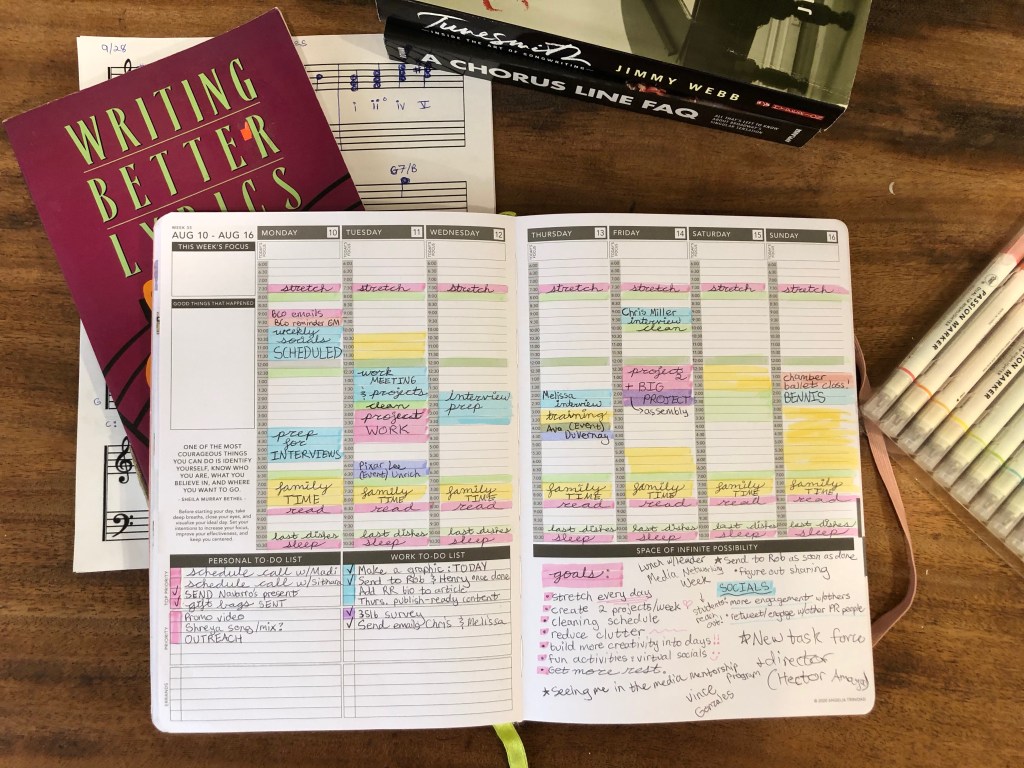
Most planners just have space for your errands and to-do lists, but versions like Passion Planner help you do more! They’re designed for more creative planning, with space for both your next big project and your grocery lists. I’ve had this planner for three years and could go on and on about it for hours, but here are the basics of what makes it so great:
– It gives you space for your work and personal to-do lists
– The weekly spread breaks down each day into 30-minute chunks to help you plan ahead and keep track of how you’re using your time
– There’s a weekly “space of infinite possibility” for 2 a.m. ideas and doodles
– The monthly spread has a section for you to break down your goals for the month however you see fit — and a guided journaling page for reflecting on the previous month!
Passion Planner might not work for everyone, but I’d highly recommend investing in something like it that’s a creative journal/planner combined. If you’re interested in Passion Planner, they have free PDFs that you can download to try the format for a week before you invest in a beautiful leather annual planner. Check it out at: https://passionplanner.com/
2. Then…use it!

I know, I know, it seems pretty self-explanatory. But you’d be surprised how many planner pages I’ve left blank while caught up in the hustle and bustle of the week. Try planning things ahead for your project; set arbitrary deadlines for yourself two weeks and two months from now (maybe in pencil, so you can adjust as needed for the creative process). Having some benchmark goals in your mind will help you stay on track without sacrificing the process.
3. Create a specific space for your project

Since most of what I’m doing is writing, I’ve designated a notebook reserved for “musical things only.” This way, all of my ideas are centralized in one place. I can’t tell you how many times I’ve had lyrics for one song strewn across four different notebooks — tracking down every last word takes forever!
4. Read up on your topic!

Do I know a lot about musical theatre that can only be learned through first-hand experience? Yes. Am I as knowledgeable about writing musicals as Lin-Manuel Miranda? Nope! There’s always something to learn from the pros who came before you in any related field, even though every project is unique. For example, if your project is a new immersive storytelling experience unlike anything that’s ever been done before, read books by people who create installation art pieces or immersive experiences to learn more about the basics. Knowing that others have done similar things successfully and learning more about their challenges and triumphs can inform our process — and give us a boost of confidence to keep going when we’ve written half the musical and suddenly decide that we don’t like it.
On my list of musical-related books so far: “Writing Better Lyrics” by Berklee’s Pat Pattison and “A Chorus Line FAQ” by Tom Rowan (my musical concept follows a similar ensemble format).
5. Create a brainstorming flowchart
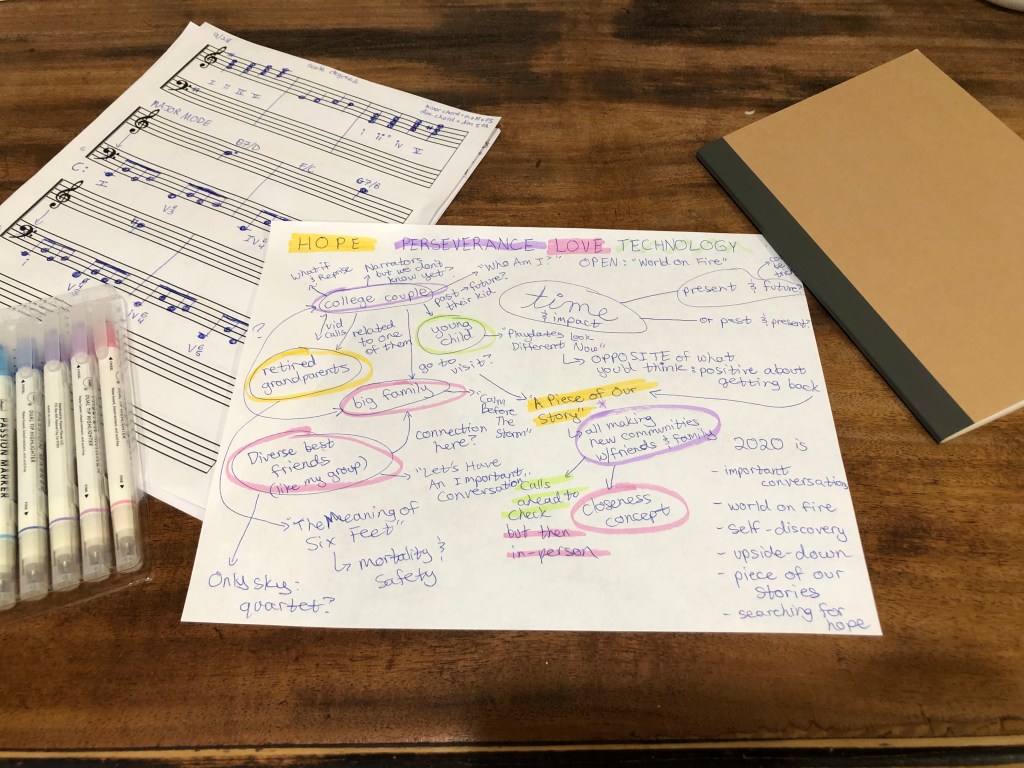
This flowchart can include anything: photos, words, fabric scraps, magazine clippings, really anything that helps you get to the core of your idea. Don’t worry about how it looks, just get those creative juices flowing! If you’re also using a notebook to hold all of your ideas, tape it in or slip it in the front so you can always refer back to it.
There’s no foolproof method for tackling big projects, but I always find that the first step to holding yourself accountable to actually keep up with them is doing a little bit of pre-planning. Of course, we all have days when we’re just not feeling it (especially in quarantine!) and need to step back from our projects. But planning creatively will ensure that there’s always an entry point to get back into it when you’re feeling ready to return to your project.
 Lightbox