

I’ve always been jealous of the beautiful bullet journals I see on Instagram and Pinterest. With their flawless brush script titles, intricate doodles and perfectly-placed photos and washi tape strips, the bullet journal spreads of my wildest dreams always seem so out of reach. I mean, how does someone even start to come up with an organizational system for their entire life that fits into an adorable notebook, let alone decorate it flawlessly? Could I ever do that? No way.
Or so I thought. Luckily, my friend Erica, who runs studygram account @ericabujos, helped me dispel some of those doubts. She’s an avid bullet journaler who also co-owns an adorable sticker company, @33northstudio. As we talked all things bujo, Erica taught me that it’s not about creating the perfect, defined spread; if anything, bullet journaling is a great way for creatives to make flexible organization systems. You can draw spreads that uniquely fit your week, leave space for all of your 4 a.m. in-the-dark scribbled brainstorms, and keep track of your habits along with your to-do lists all in one place.
Erica originally started bullet journaling in high school, when she wanted something more customizable than her school-district-issued planner to keep track of everything. Now a senior in college, she’s continued to bullet journal throughout her academic career. If you’re ready to let go of your perfect spread fears and bullet journal your way to contentment and creative organization, check out some of Erica’s top tips below.
Focus on function over fanciness
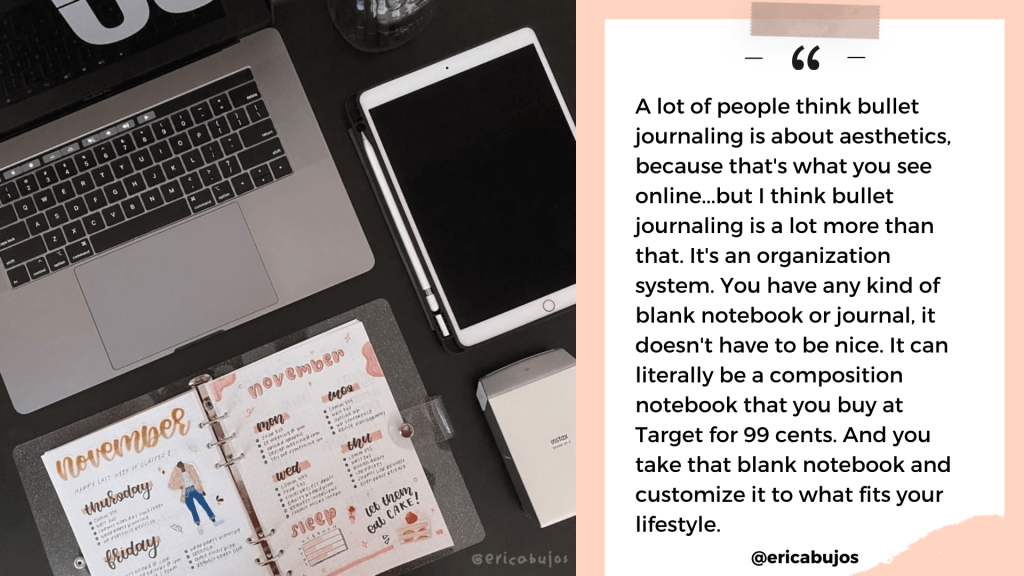
If you ever gone down the rabbit hole of Instagram’s explore page and wound up admiring the beautiful spreads of studygram like I have, you might be overwhelmed by the seemingly countless layout options and styles available. But Erica says it’s important to remember that bullet journaling is about so much more than creating the most aesthetically-pleasing spread.
Track what matters most to you
Along with being a freeform dreaming space perfect for artists, bullet journals are great habit-makers and assignment-trackers. In her journal, Erica has a section for logging her work assignments, as many of us probably do in our planners, but she also has additions like a water tracker and a spending tracker that help her stay on top of her longer-term goals. She experimented with different styles of tracking mechanisms for a while, before finally settling on a method she liked.
“Eventually, once I got more comfortable with what system I like the most, that’s when I started integrating calligraphy, the colors of washi tapes, and the artwork,” Erica said. “But I think the basis of bullet journaling is really figuring out which planning system and structure works best for you and customizing it later on once you’re comfortable.”
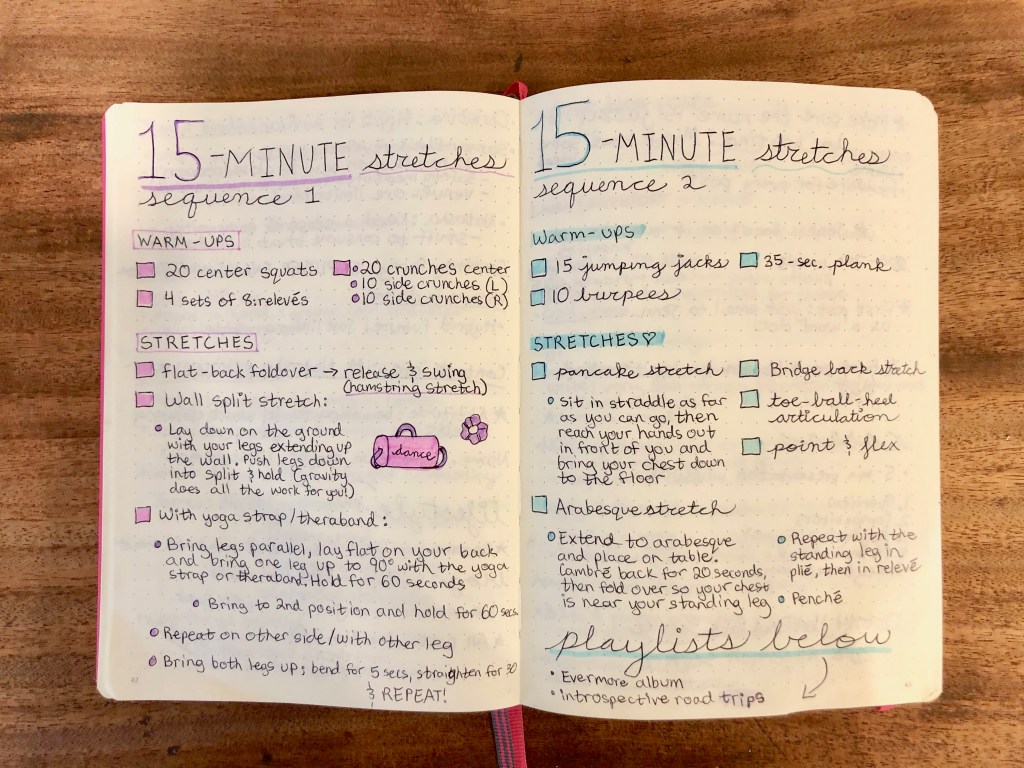
Taking Erica’s advice, I looked up some different bujo organizational frameworks and trackers and customized them, just using a regular ballpoint pen, colored pencils and highlighters. I teach dance classes pretty often, so experimented with trying to come up with different note formats for class routines, along with doing some basic trackers and listicles. Some of these, I’d started previously, but never finished, so I added to them!
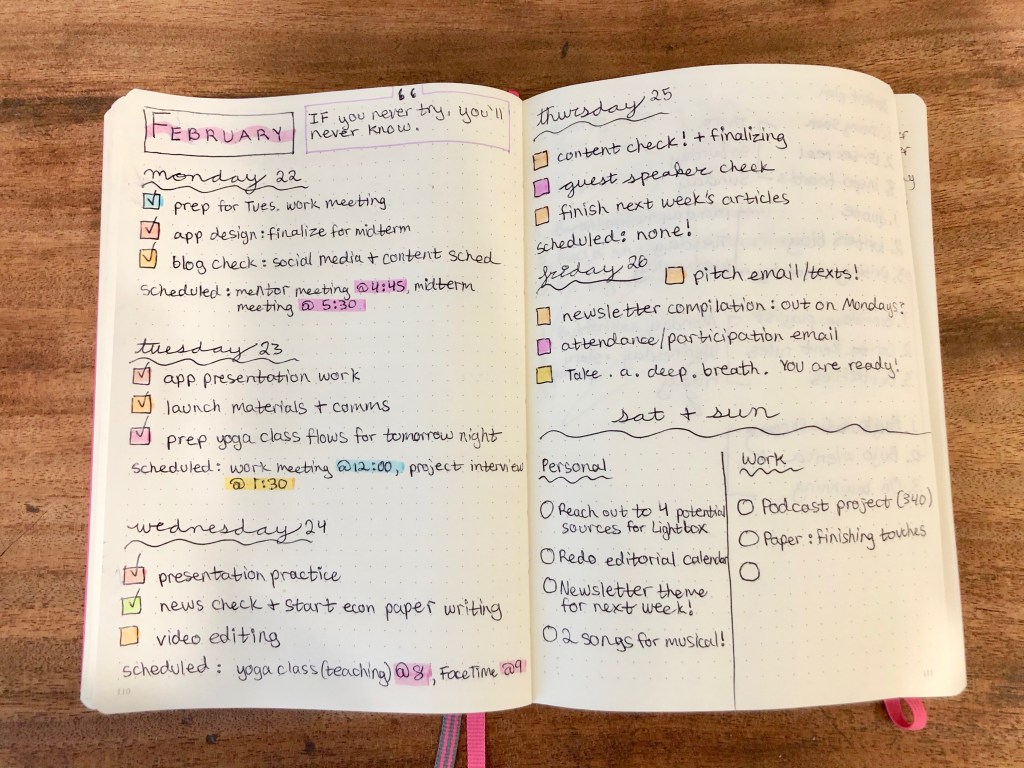
The listicle
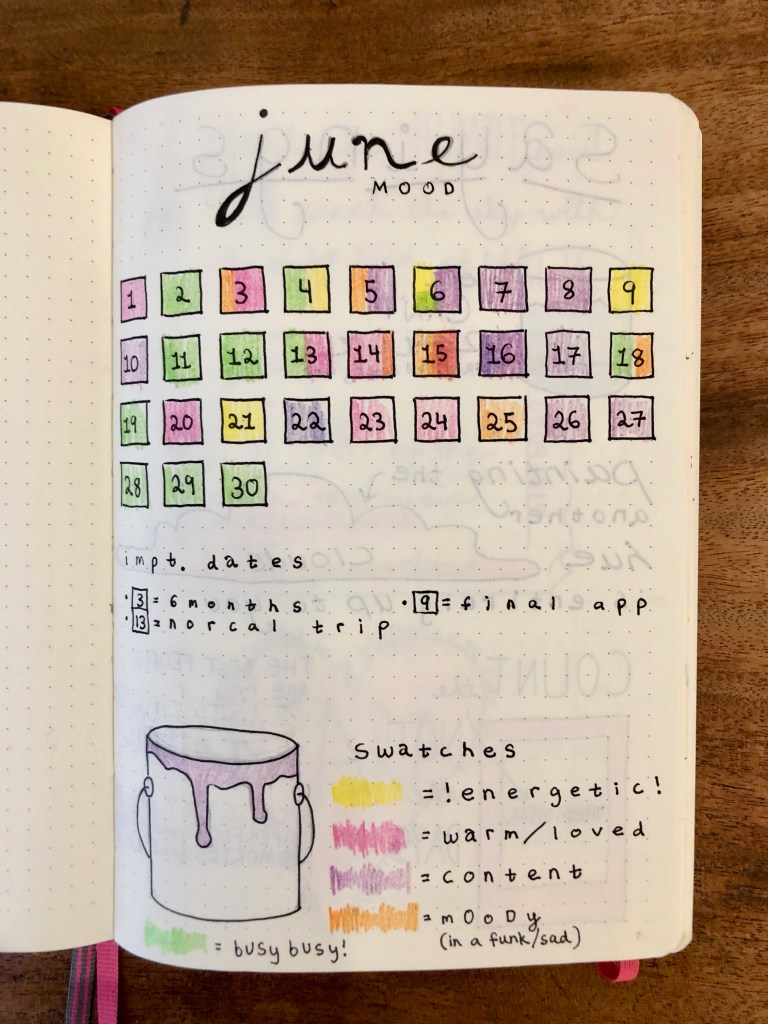
The monthly mood tracker
The time-based plan

The listicle with categories
Experiment and express yourself
Which leads us to the next point: once you’ve got your system, don’t be afraid to get creative! To be messy and imperfect and have fun with your bullet journal. And trust the process.
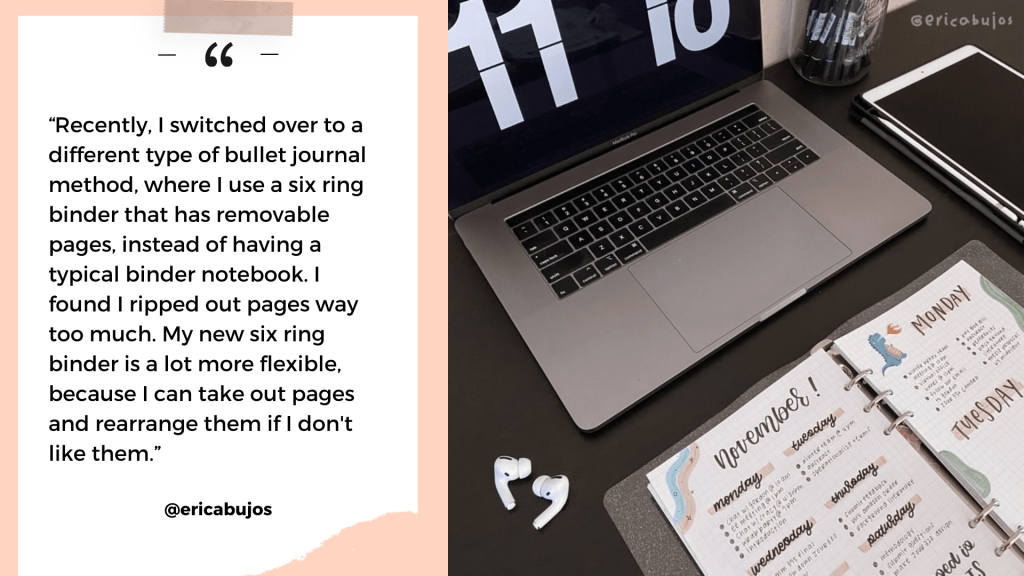
“I bashed myself a lot for not having the prettiest bullet journal spreads,” Erica said. “I feel like anyone who enters the [bullet journaling] community has that phase where you rip out pages because it’s not aesthetic enough or you just don’t think you get the right picture for Instagram or Tumblr…it’s a work in progress. I feel like my style is still changing based off of the inspiration that I see throughout the community and through my friends.”
Plan ahead
Make your spreads in advance if you can. This way, you’ve already got a framework to help you organize things for a busy week, and you won’t feel like you’re scrambling to come up with one once the week is already in motion! Erica says that planning your spreads early can also help you feel more in control of your upcoming tasks. Here’s the plan-ahead schedule she uses:
“I usually sit down on a Sunday sometime before the week actually starts to plan out my entire week spread, then each day in the morning, I’ll go in and write in my tasks,” Erica said. “So everything’s already pre-laid out, pre-drawn out for me. I feel like I just have more agency over what I have to do that day, I feel more certain about the tasks I have to do.”
That kind of certainty about the list of things to be done throughout the week? That’s why I want to get into bullet journaling! It’s like creating a physical framework in your notebook for the frame of mind you want to come into the next week with.
Be flexible
Finally, if you’re not happy with how the first attempt goes, don’t feel discouraged! Try a different system, and see where it takes you. Finding the framework that works for you doesn’t have a due date — in fact, Erica herself is still experimenting.
Ready to dig up an old notebook and get journaling? If you’re looking for some cute stickers to spice up your first spreads, check our Erica’s company 33NorthStudio! Here’s a sneak peek of some of the adorable stickers they sell:
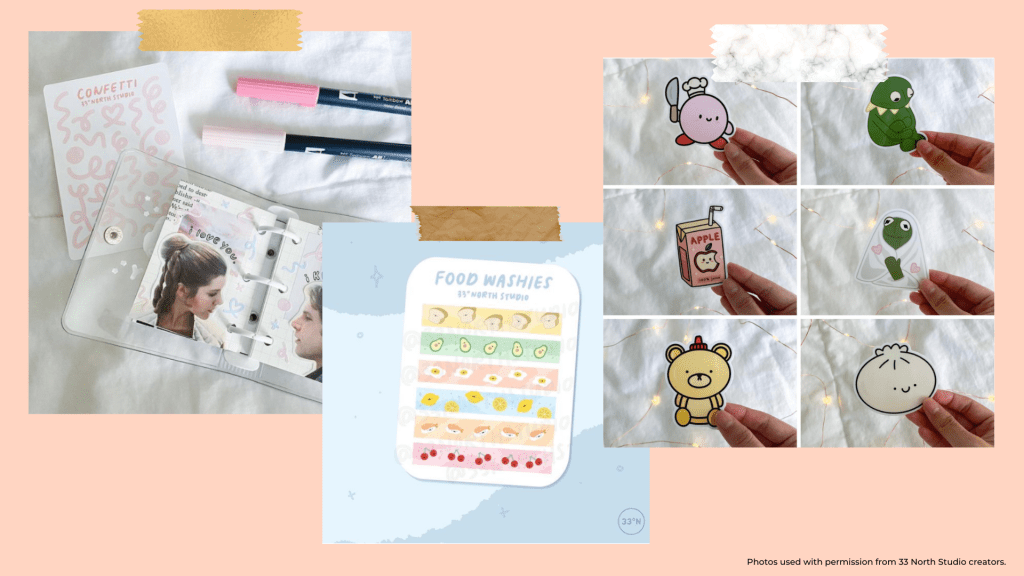
If you want to share your progress with the world, send us pics of your journal spreads at lightboxsociety.staff@gmail.com to be featured on our Instagram.
 Lightbox